What 60 design students taught us about teaching AI
Author:
Michael Paulus
Mar 25, 2026
•5-minute read


When we set out to lead a 2-day AI workshop at Savannah College of Art and Design (SCAD), we thought the hard part would be teaching prompting. Turns out, the students already knew what they wanted to build: case studies, mock portfolios, redesigned campus tools. The real challenge was something no one talks about: the gap between creative ambition and technical setup.
That insight shaped everything about how we ran the weekend. And honestly, it's changing how we think about AI education at Rocket.
Where the idea started
Last December, our design team ran an internal AI patterns workshop exploring how generative tools fit into our design process. The energy in that room was contagious. Two of our interns, Blake Mitchell (a SCAD alumnus) and Kara Rivenbark (a current SCAD student), saw an opportunity and ran with it. What if we brought this same hands-on approach to the students they knew were hungry for it?
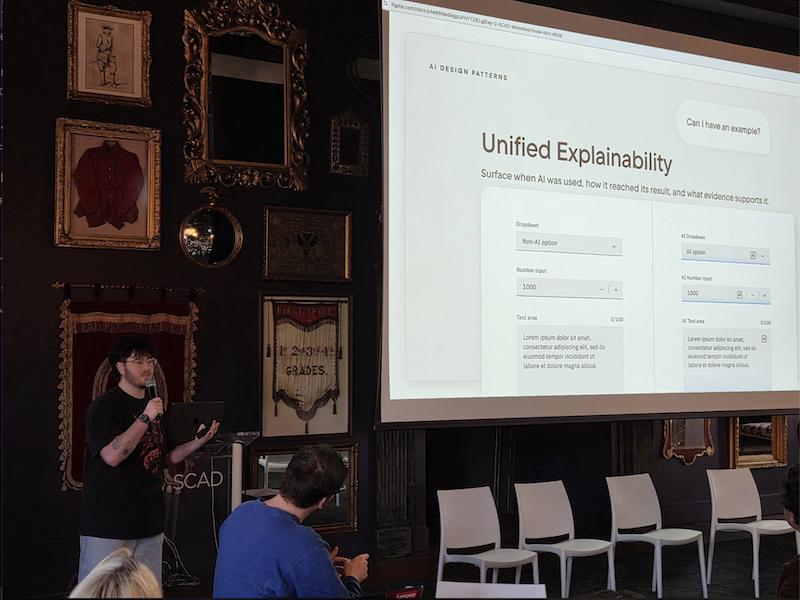
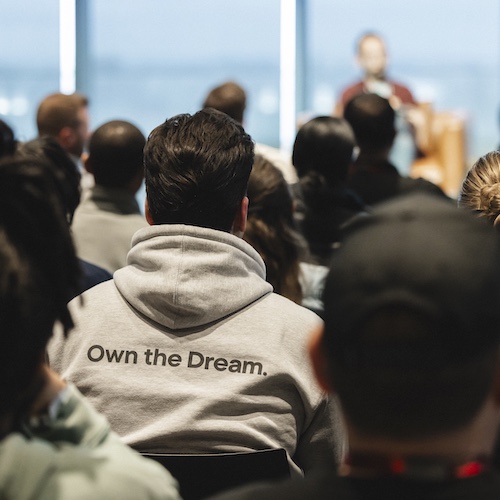
With support from Rocket's design leadership and our talent team, Blake and Kara built a workshop from the ground up. On February 7 and 8 at the SCAD campus, they led 60 SCAD students through 2 days of AI-assisted design collaboration with the support of nine team members from Rocket.
That's something worth pausing on. Two interns pitched an idea, and the company said yes. Not eventually. Not after 6 months of planning. They said yes, gave them resources, and showed up in force to make it happen.
The setup problem no one talks about
Here's what we learned within the first hour: the biggest barrier students face with AI tools isn't ability or creativity. It includes installation screens, account configurations, and platform navigation. Students arrive knowing exactly why they want to use AI, but the mechanics of each tool become the roadblock.
We'd seen this pattern at other workshops. Presenters race from step 2 to step 15, and by the time participants look up, they're lost. So, we made a deliberate choice. We built the entire workshop around Figma Make, a tool every student already had installed and understood at a baseline level. No downloads. No setup. No lost time.
That single decision let us skip the bottleneck and go straight to the part that matters: learning how to communicate effectively with AI.
What we actually taught
The core of the workshop was a structured approach to prompting that works across any AI platform, not just Figma Make. We introduced students to a framework called TC-EBC (Task, Context, Elements, Behavior, Constraints), a repeatable structure for writing clear, effective prompts that produce better results regardless of the tool.
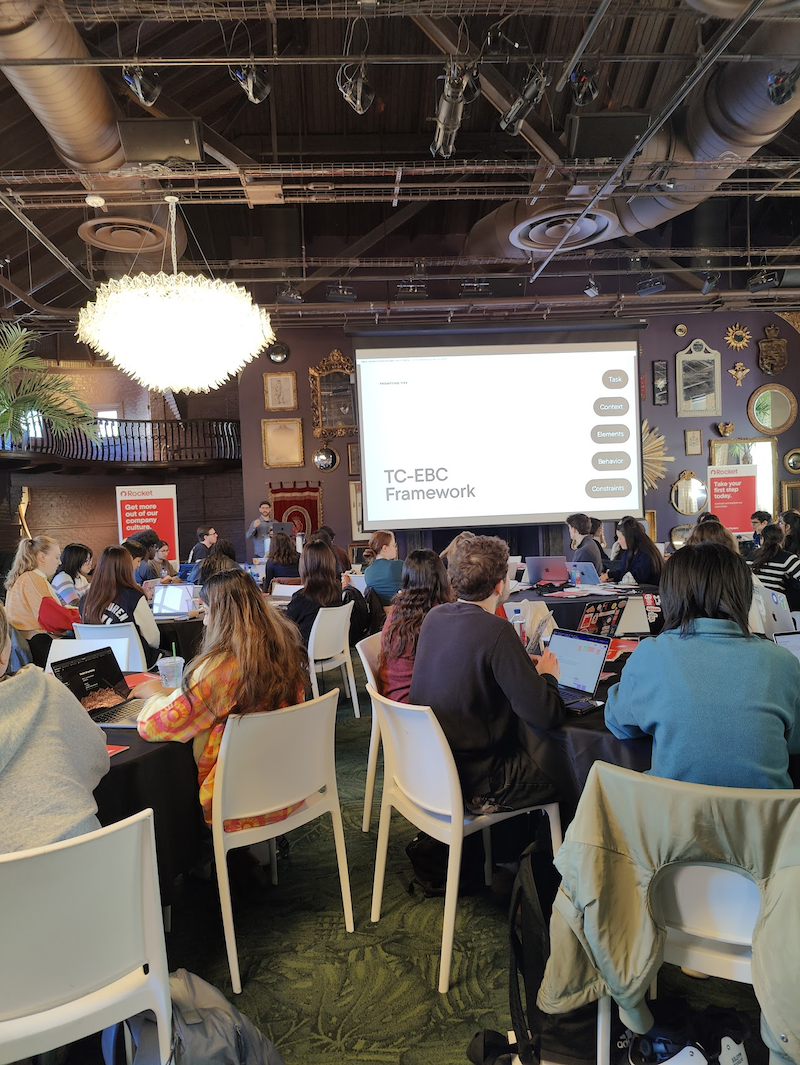
Beyond the framework, we covered practical strategies students could apply immediately: preparing your inputs before your prompt, keeping language direct and simple, iterating one small change at a time, and using AI assistants to refine your own prompts before sending them to a design tool. We also walked through Figma Make-specific techniques like organizing file structure for better AI output, defining custom rules in a guidelines file, and using the point-and-edit tool for precise iterations.
But the curriculum was only half the equation. The format mattered just as much.
Why 2 days changed everything
We deliberately spread the workshop across a full weekend. Day 1 focused on introductions, ideation, prompting fundamentals, and hands-on work time. Day 2 opened with a recap, introduced AI design patterns, and gave students a full hour of dedicated work time followed by an open Q&A.
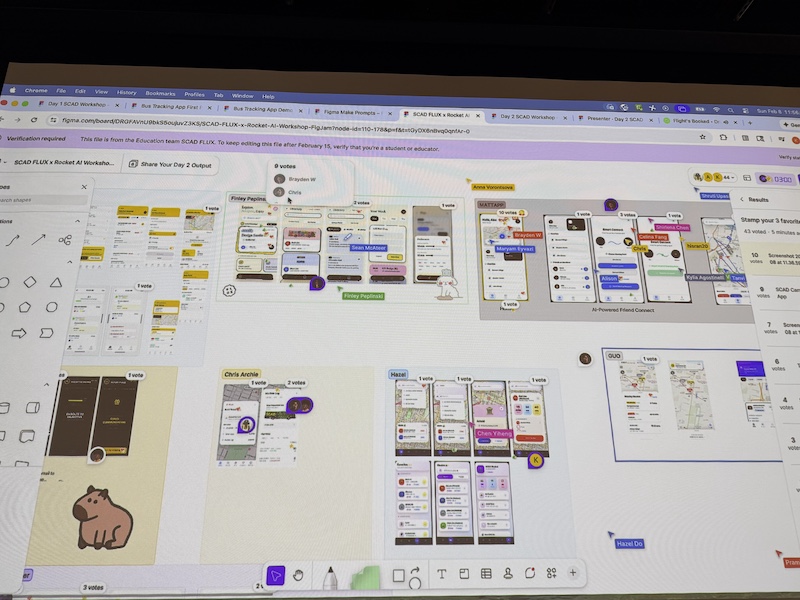
The key was weaving work sessions directly into the presentation flow rather than saving them for the end. After every concept, students immediately applied it with a real design challenge: reimagining the SCAD campus bus tracking experience, a problem students deal with every single day. Grounding the exercise in something they actually cared about made all the difference. Students weren't designing the hypothetical. They were solving their own problems.
Four Rocket design leaders (Taylor Cornelius, Jeff Martin, Jennifer Onyeagbako, and I) circulated throughout both days. We sat with students, gave design feedback, tested prompting strategies together, and pushed work further than students thought they could. Just as importantly, we connected students to each other. When you're walking in the room, you start to see patterns. One group is solving a navigation problem the same way another group tackled three tables over, just from a completely different angle. Pointing those connections out, getting students to look at how their peers were approaching similar challenges, turned the room into something bigger than a workshop. This wasn't a lecture with a Q&A tacked on at the end. It was collaborative from the very first hour.
On Sunday morning, students came back voluntarily on their own weekend to keep working. They weren't required to be there. They showed up because they wanted to keep going. That told us more about the workshop's impact than any survey could.
What the students took away
When we asked participants what resonated most, the answer was clear: the universal prompting strategies. Not the tool-specific tips or the Figma Make shortcuts, but the transferable skills. Students recognized that learning how to structure a prompt, how to iterate effectively, and how to think about AI as a design collaborator would serve them across every tool they'll encounter in their careers.
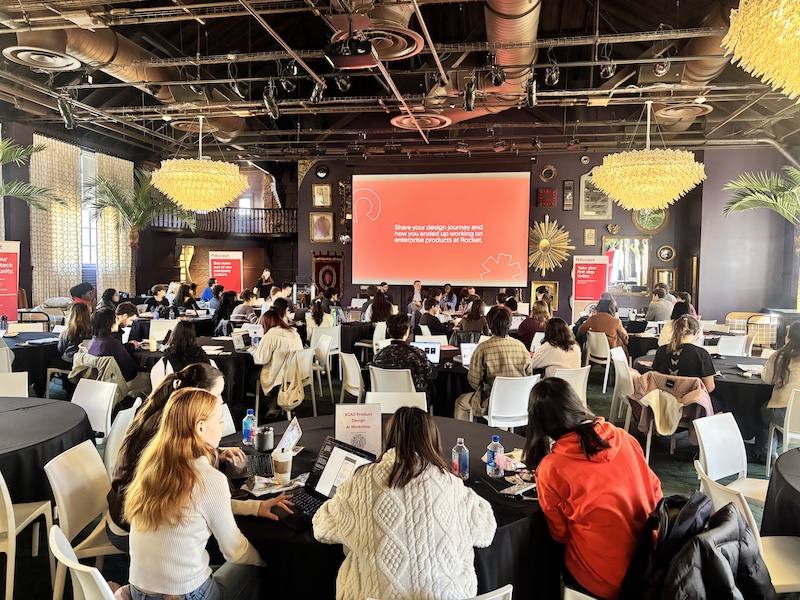
Something else happened that we didn't plan for. Students started watching how mentors worked with each other, how they answered questions from other groups, and how they approached problems differently. The cross-pollination between groups became its own learning layer. By the end of the weekend, students weren't just more comfortable with AI tools. They were less afraid of them. They went from hesitant to experimental, which is exactly the mindset shift that matters most.
What Rocket took away
For our team, the weekend was a living example of one of Rocket's core philosophies: launch and learn. Blake and Kara didn't wait for a perfect curriculum or a fully baked program. They thought big, started small, and iterated fast. They built the workshop, tested it with real students, gathered feedback, and came out the other side with a playbook that's better than anything we could have designed in a conference room. The best way to learn anything is by doing it, and that's exactly what this team modeled for the students who are now carrying that same mindset into their own work.
Nastasha Tan, our VP of Design, and Gearramia Coffey, our Talent Relationship Manager, were on the ground helping build connections between students and career opportunities at Rocket. Those connections didn't end when the weekend ended. Students and mentors have continued conversations through mentorship sessions, and several students have reached out directly to explore what a design career at Rocket looks like.
This is what happens when a company means what they say about developing the next generation of designers. Not a recruiting booth. Not a sponsored lunch. A weekend of real work, real mentorship, and real investment in people.
What's next?
The crew that made this happen is taking a moment to reflect, but we're already thinking about what comes next. We're exploring ways to bring a condensed version of this workshop to teams across Rocket, and we're looking at formats that could scale the concept even further: an onsite AI conference, online 101 sessions, and potentially an AI design hackathon.
If teaching 60 students over a weekend taught us anything, it's that the appetite for practical, human-centered AI education is enormous. And the playbook works.
Stay tuned.
This workshop was made possible by the full team: Nastasha Tan, Michael Paulus, Taylor Cornelius, Jennifer Onyeagbako, Jeff Martin, Blake Mitchell, Kara Rivenbark, Gearramia Coffey, and Gillian Meerhaeghe.

Michael Paulus
Michael Paulus is a Principal Product Designer at Rocket, where he works at the intersection of product design, AI tooling, and design education.
Related Resources

3-minute read
Speed of development using AI
Discover how Rocket® leverages AI to transform every meeting into actionable insights, driving business value, productivity, and knowledge management.
Read more

10-minute read
How we made AI a first-class engineering citizen — and sustained 3.5x productivity
How Rocket sustained 3.5x productivity by treating AI as a full engineering contributor — with the architecture, testing, and guardrails our clients deser...
Read more
2-minute read
Welcome to the Rocket engineering & product blog: Building the future of homeownership with AI
Discover how Rocket is leveraging AI to transform the homeownership journey, from innovative technology solutions to reimagining the housing ecosystem with a mi...
Read more